Gardening Soho — Recycling and Sustainability in Urban Gardens
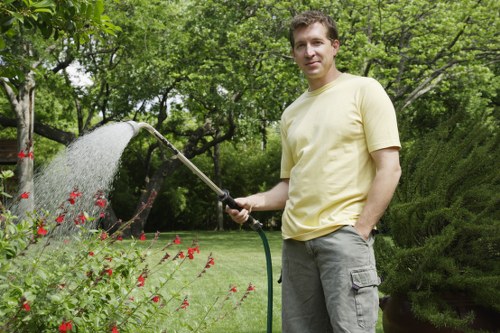 Gardening Soho is committed to creating an eco-friendly waste disposal area and a thriving sustainable rubbish gardening area across our work in the local boroughs. We focus on reducing landfill, increasing reuse, and promoting circular practices in small green spaces and larger landscaping projects. Our approach aligns with the boroughs' emphasis on careful waste separation — paper and cardboard, plastics, glass, food scraps and garden waste — so that every bag and bin is part of a resource stream rather than refuse.
We set a clear recycling percentage target for our operations and partner activities: a minimum of 70% recycling and recovery of all non-hazardous site materials within 12 months of project completion. That target covers segregated green waste for composting, wood and brick reused where safe, and plastics and metals routed to appropriate facilities. The goal helps quantify our performance toward a low-waste, low-carbon horticulture model and drives continuous improvement in our sustainable rubbish gardening area practices.
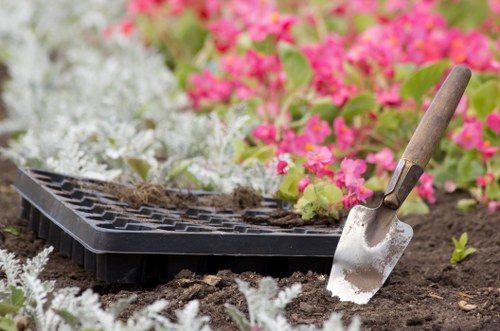 In practice this means we map on-site flows for organic and inorganic streams. We install labeled containers, provide training for crews on borough-specific sorting rules and monitor tonnages monthly. Our operational choices are guided by an emphasis on recycling and sustainability — from composting leaves and prunings to separating inert construction waste for transfer to local transfer stations and licensed recycling centres.
We work with the nearest local transfer stations to minimise haulage distances and reduce emissions. These transfer stations accept segregated garden waste, soils (when tested and clean), wood, metal and mixed recyclables, enabling efficient onward processing. Key transfer hubs in the area operate under strict environmental permits which match our standards for responsible disposal and recovery, keeping the footprint of our sustainable waste management for gardens as small as possible.
 Partnerships are central to our model. We collaborate with charities and social enterprises that specialise in reuse and redistribution of materials: timber salvage groups that turn old sleepers into benches; community compost schemes that take leaf litter and woody prunings; and charities that repurpose surplus pots, tools and soil conditioners. These alliances create a circular supply loop that benefits local residents and community gardens while reducing the need for new materials.
Our programme of charity partnerships includes regular donations of usable plants, potted shrubs and surplus soil to community gardens, and arranging collections for larger items. We document these transfers and publish periodic reports showing diversion tonnages so stakeholders can see how ‹recycling and sustainability› translate into social and environmental value across the boroughs.
To ensure emissions stay low across the transport chain we operate a fleet of low-carbon vans for collections and deliveries. These vehicles are hybrid or fully electric where feasible, and routes are scheduled to avoid unnecessary mileage. By combining efficient routing, frequent waste consolidation at transfer stations and low-emission vehicles, our approach reduces the carbon intensity of garden waste logistics compared with conventional haulage systems.
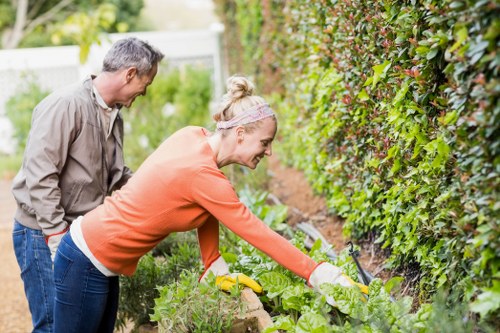 Our site supervisors enforce strict separation rules: green bins for organics, labelled crates for plastics and metals, and dedicated skip compartments for inert materials like rubble. We also provide clear signage reflecting the boroughs' separation guidance — for example, local policies that accept food waste with garden clippings together for municipal composting, while keeping treated timber and contaminated soil segregated for specialist handling.
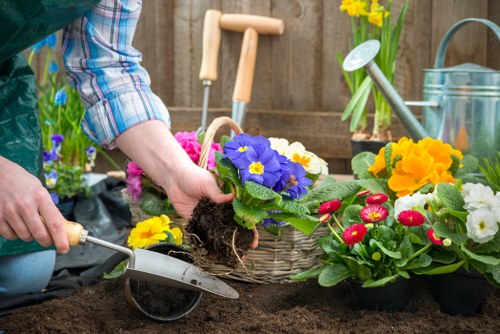 Beyond logistics, we prioritise prevention and reuse: salvaging paving slabs, repurposing reclaimed timber, and encouraging clients to choose recyclable materials at procurement. We supply educational material for community groups (without acting as a how-to guide) that explains local separation categories and how their individual contributions improve recovery rates. These behavioural nudges, combined with our operational systems, help us move steadily toward and beyond our recycling percentage target.
What to expect from our sustainable rubbish gardening area services
When we work on a garden or public planting site you will see:
- Segregated collections for organics, reusable items, recyclables and inert waste;
- Transfers to licensed local transfer stations and recycling centres to maximise material recovery;
- Charity partnerships that ensure usable plants and equipment get a second life;
- Low-carbon vans and consolidated routing to cut emissions;
- Transparent reporting on diversion rates and progress toward our recycling percentage target.
Commitment to the boroughs and continual improvement
Gardening Soho's sustainability programme is not static. We review performance against our 70%+ recycling target, update procedures to reflect borough policy changes on waste separation, and expand our network of transfer stations and charity partners. Our aim is to make every urban garden project part of a resilient local resource cycle: less waste, lower carbon, and more benefits returned to neighbourhood green spaces.
By combining operational rigour, strategic partnerships and investment in low-emission transport, our eco-friendly waste disposal area practices set a practical standard for sustainable urban gardening. We believe small changes on many sites add up to measurable improvements for the city’s environment and communities.
Finally, our work champions reuse and recovery in gardening as essential components of an urban circular economy: a clear, accountable approach to recycling and sustainability that keeps organic matter and reusable materials working for the community rather than being lost to landfill.